



GPS Fleet Tracking vs Manual Fleet Management | Flotilla IoT
Are you one of those who are still managing your fleet with spreadsheets, phone calls, and paper logs? No worries, you’re not alone, but you might be falling behind. According to a 2025 fleet management survey, manual administrative tasks remain one of the top operational inefficiencies, with managers spending 15–20 hours every week on processes that an automated system can handle in minutes.
The question most fleet operators are asking today isn’t whether to upgrade. GPS fleet tracking and manual fleet management represent two fundamentally different philosophies. Do you know the exact difference or which one is the best?
In this guide, we break down both approaches head-to-head, comparing real costs, operational efficiency, safety outcomes, and scalability so you can make a confident, informed decision for your business. Whether you’re managing 5 vehicles or 500, the right system can mean the difference between barely surviving and consistently thriving.
GPS Fleet Tracking vs Manual Fleet Management: Know the Difference in Detail
Many business owners think they understand the difference between the two approaches, but honestly, in practice, that understanding is often kinda surface-level. Furthermore, they know GPS tracking “shows where vehicles are,” fine, but what they don’t quite clock is what manual management is quietly taking from them. They can’t explain the reason for delayed deliveries, fuel budgets that keep leaking, driver behavior trouble they only see after an accident, and compliance gaps that pop up only once it’s too late to fix things cleanly, without a scramble.
Getting this difference in depth helps fleet operators and service providers choose the right technology investment at the right moment.
What is Manual Fleet Management?
To monitor vehicle operations, manual fleet management software relies on conventional, non-automated techniques. Usually, this consists of:
- Phone calls and radio communication with drivers
- Paper-based logbooks for mileage and trip records
- Spreadsheets for tracking maintenance schedules
- Verbal reporting of incidents and driver behavior
- Physical inspection of vehicles for condition checks
- Manual fuel receipts and expense tracking
For relatively small fleets, such as two or three cars, manual management may be effective, but as the fleet increases, it becomes more costly and unreliable.
What is GPS Fleet Tracking?
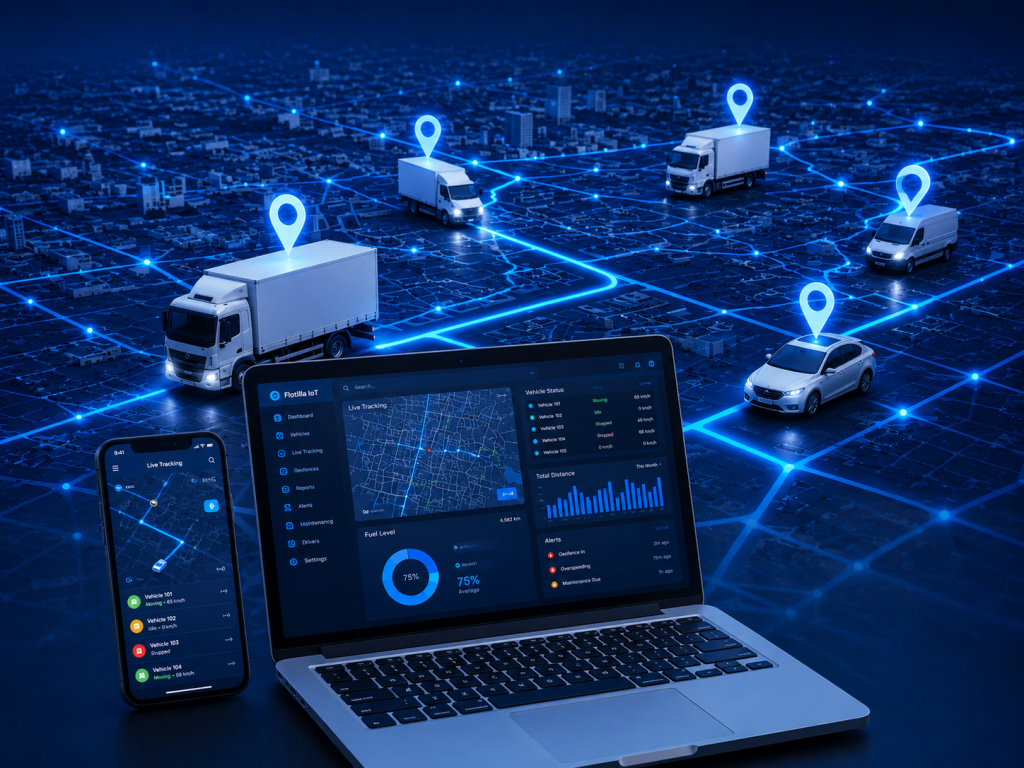
GPS fleet tracking combines small hardware devices installed in vehicles with cloud-based software to give fleet managers complete real-time visibility over their entire operation. Furthermore, modern systems like Flotilla IoT go far beyond simple location tracking. They monitor Driver Behavior Monitoring, fuel consumption, maintenance needs, trip history, geofence violations, and more, all from a single dashboard accessible on any device, anywhere in the world.
Now, let’s put these two approaches head-to-head.
1. Real-Time Visibility: GPS Wins by a Mile
Manual Management:
Drivers are expected to text or call their current location. It is a time-consuming process, can lead to miscommunications, and does not provide real-time accuracy. You often learn too late if a driver has been delayed, is stuck, or is taking an unauthorized route.
GPS Fleet Tracking:
The location of every vehicle is displayed on a map that’s updated in the Real-time Vehicle Tracking System. You can see the speed, direction, and stops of a vehicle, as well as its route, without having to pick up your phone. You will receive an alert if a driver enters restricted areas or goes off route. It takes only seconds to dispatch the nearest driver for a particular job.
It’s not just about convenience, but also the impact it has on delivery times, customer satisfaction, and operational costs
2. Fuel Cost Management: Data vs. Guesswork
Fuel costs typically account for 40% of fleet operating costs. Controlling fuel consumption is therefore critical to profitability.
Manual Management:
Rely on fuel receipts submitted by drivers and self-reported mileage. However, this system leaves you vulnerable to fuel fraud, overstated claims, or unauthorized vehicle usage. No easy way is available to identify drivers who drive excessively long routes, idle excessively, or fuel their vehicles for personal use.
GPS Fleet Tracking:
A fleet fuel management system tracks every aspect of fuel usage automatically. GPS systems monitor idle times, speeding, abrupt acceleration, and route efficiency. All of these have a direct impact on fuel consumption.
Additionally, fuel consumption that is abnormally high triggers alerts. Route optimization automatically suggests the most efficient routes. GPS fleet tracking can reduce fuel consumption by up to 30 percent through improved route planning. Savings like this can be tens of thousands of dollars a year for a 50-vehicle fleet.
3. Driver Safety and Behavior: Accountability Without Confrontation
Manual Management:
Without GPS, it is almost impossible to monitor driver behavior. You only hear about incidents after they occur, like accidents, speeding citations, or complaints from customers. When it comes to coaching drivers, there is little evidence that can be used to support the conversations. This makes them awkward and ineffective.
GPS Fleet Tracking:
However, modern systems can track any driving behavior — including excessive idling, speeding, harsh braking, sudden accelerations, sharp corners, and harsh braking. Flotilla IoT eco-driving generates scorecards for drivers so that managers can identify those who are driving safely and those who require coaching. This encourages a culture where accountability is rewarded without confrontation. The drivers who are aware that they will be monitored drive more responsibly, resulting in fewer accidents, reduced insurance premiums, and less vehicle wear.
4. Vehicle Maintenance: Reactive vs. Proactive
Manual Management:
Maintenance is usually reactive – vehicles are only serviced when something breaks, or when the driver reports an issue. This “fix-it-when-it breaks” approach can lead to unexpected breakdowns, costly emergency repairs, and lengthy vehicle downtime.
GPS Fleet Tracking:
Data-driven and proactive maintenance. GPS systems monitor engine hours, mileage, and diagnostics live. Flotilla IoT enables administrators to set up automated maintenance alerts triggered by the date, engine hours, or mileage — so that vehicles are serviced well before any problems arise. Moreover, this preventative approach can reduce downtime, prolong the life of vehicles, and stop minor issues from becoming major repairs.
5. Driver and Trip Record Keeping: Paper vs. Automation
Manual Management:
At the conclusion of each shift, drivers complete paper logbooks, frequently by memory, which results in incomplete or erroneous data. It takes hours to generate reports for compliance or management review, and it is difficult to save and retrieve this data.
GPS Fleet Tracking:
Automatic recording of each journey. Start and finish times, the route followed, the distance traveled, the stops made, and the speed at each location are all recorded in the system and are accessible for inspection at any time. It takes seconds, not hours, to generate reports. Managers can visually replay each trip on the map with full trip history playback, which makes incident or complaint investigations simple and grounded in facts.
6. Theft and Unauthorized Use: Blind Spot vs. Instant Alerts
Manual Management:
Theft of a vehicle or unapproved usage of it after hours may go unnoticed for hours or even days. It is impossible to determine whether a car has been stolen or whether a driver is using a corporate vehicle for personal purposes after work hours without being able to see how the vehicle is moving.
It is impossible to determine whether a car has been stolen or whether a driver is utilizing a corporate car for personal tasks after work hours if there is no insight into vehicle activity.
GPS Fleet Tracking:
Using geofencing, managers may create virtual barriers around depots, construction sites, or even towns. An immediate alarm is sent out if a car leaves a designated area after business hours. Automobiles that have been stolen can be quickly found and their location communicated to law enforcement. The danger of theft is significantly decreased by this real-time protection, which also facilitates prompt asset recovery in the event of an occurrence.
7. Customer Service: Guesswork vs. Precision
Manual Management:
It is hard to give customers accurate ETAs when you don’t really know where your drivers are at that moment. People on the customer side see delays, and there is often no real explanation. Also, this messes with your reputation; it erodes trust, too.
GPS Fleet Tracking:
With GPS live tracking, dispatchers can share accurate real-time ETAs. When a vehicle gets near the drop-off, geofenced arrivals can automatically send a notification to customers, basically without extra effort. From what research indicates, GPS-tracked fleets land around 85 to 95% on-time delivery performance, while manually managed fleets are closer to 20 to 30%. That reliability gap acts like a major competitive advantage, and yes, it is hard to ignore.
8. Scalability: Manageable vs. Unmanageable
Manual Management:
Five cars can be managed by hand. Overseeing 50 or 500 is not. The effort of manual tracking, record keeping, driver communication, and maintenance scheduling increases proportionately with the size of your fleet, necessitating more personnel and time.
GPS Fleet Tracking:
As your business grows, you need a modern platform as well. The system automatically manages all monitoring, reporting, and warnings, whether you have 10,000 cars or only 10.
A new car is added in a matter of minutes. Flotilla IoT is made to grow from small fleets to large business operations without requiring more personnel or increasing operational complexity.
9. Compliance and Reporting: Risk vs. Readiness
Manual Management:
Regulatory compliance, whether it’s about hours of service, vehicle inspection records, or emissions reporting, is just hard to juggle when it’s done by hand. Furthermore, if records are missing, or the logs get even a little off, you may end up with fines, audits that fail, or legal exposure… which nobody wants.
GPS Fleet Tracking:
Moreover, with GPS Fleet Tracking, all the compliance-relevant data is captured automatically and kept in a secure storage setup. You can pull reports together in minutes for audits, insurance claims, or regulatory submissions. Using Flotilla IoT, you’re able to set automated reports to land in your inbox daily, weekly, or monthly—so that non-compliance from absent records becomes basically a non-issue.
10. Cost of Ownership: Hidden Costs vs. Clear ROI
Manual Management:
At first look, manual management feels cheaper, no software subscription to pay, so it kind of “sounds” lighter. But then you count fuel waste, vehicle theft losses, accident expenses, unauthorized vehicle use, and maintenance emergencies. Later, even the staff time is tied up in administrative tasks, and suddenly the real spend is way more, not less, than it seems.
GPS Fleet Tracking:
With GPS fleet tracking, there is a clear monthly cost, yet the return on investment is not just theoretical. It’s measurable, and it’s usually quite quick. Fuel savings, fewer accidents, longer vehicle life, plus better on-the-job throughput often pay back within the first few months after setup. Additionally, with Flotilla IoT, pricing starts from about $2 per vehicle each month, which makes it easier to adopt even for small fleets, especially if the budget is tight.
Side-by-Side Comparison Summary
| Feature | Manual Management | GPS Fleet Tracking (Flotilla IoT) |
| Real-Time Location | No | Yes |
| Driver Behavior Monitoring | No | Yes |
| Fuel Monitoring | Minimal | Full Visible |
| Maintenance Scheduling | Reactive | Proactive + Automated |
| Trip Records | Paper-Based | Fully Automated |
| Theft Protection | Minimal | Geofencing + Instant Alets |
| Scalability | Poor | Unlimited |
| Compliance Reporting | Manual & Error Prone | Automated |
| Customer ETAs | Estimated | Real-Time Accurated |
| Cost of Errors | High | Minimize |
Conclusion: Why Modern Fleets Choose GPS Tracking Over Manual Management
Fleet management is no longer just about knowing where your vehicles are; it is about building a smarter, safer, and more profitable operation. While manual fleet management may still work for very small businesses, it simply cannot keep up with the demands of modern logistics, transportation, and field service operations. Moreover, the hidden costs of fuel waste, delayed communication, unplanned maintenance, compliance risks, and administrative overload continue to grow as fleets expand.
Furthermore, GPS fleet tracking provides businesses with the visibility, automation, and control needed to stay competitive in today’s fast-moving market. From real-time vehicle monitoring and eco-driving insights to predictive maintenance alerts and automated reporting, modern platforms help businesses reduce operational costs while improving productivity and customer satisfaction.
This is what makes Flotilla IoT unique. Flotilla IoT integrates sophisticated GPS tracking, intelligent fleet analytics, driver behavior monitoring, fuel management, maintenance scheduling, and scalable cloud-based access into a single user-friendly platform for companies of all kinds. Flotilla IoT assists companies in moving from reactive fleet management to proactive operational control with reasonable costs, enterprise-level functionality, and dependable support.
Investing in a GPS fleet-tracking system for businesses is now a strategic choice that directly affects productivity, profitability, and long-term growth, regardless of whether you oversee delivery vans, construction vehicles, service fleets, or heavy equipment. Companies that use intelligent fleet management now will be at the forefront of the sector later on.

How Can White Label GPS Tracking Software Help You Expand Your Business?
White Label GPS Tracking · Flotilla IoT How Can White Label GPS Tracking Software Help You Expand Your...

How Can a Fleet Management System Improve Daily Fleet Operations?
Fleet Management Guide · Flotilla IoT How Can a Fleet Management System Improve Daily Fleet Operations? Running a...

CAR TRACKER: Improving Fleet Visibility, Safety, and Operational Efficiency
A GPS Car Tracker does more than show a point on a map. Many setups can share location...