




Best Fleet Management Software 2026 | Flotilla IoT
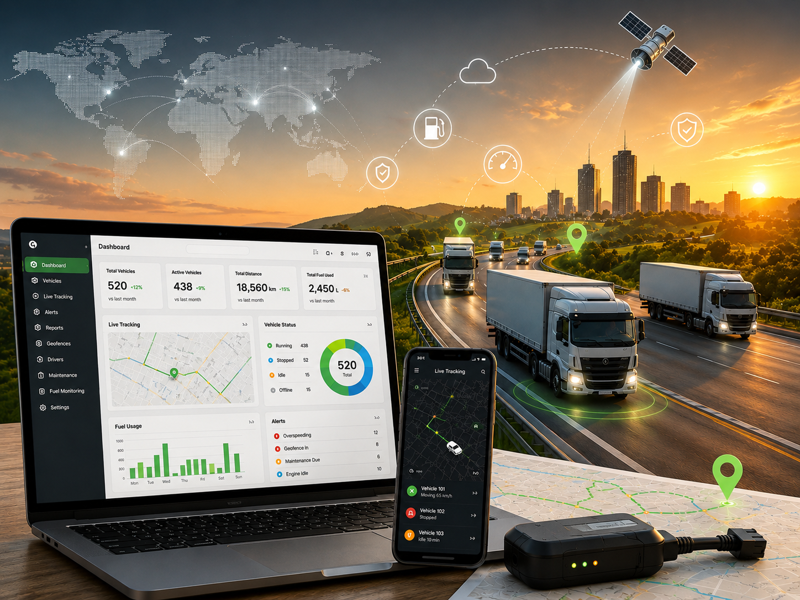
It has never before been so competitive in the fleet management software market. In 2026, there will be over 300 platforms, and the market is expected to grow at a rate of nearly 17% per year. To meet this competition, choosing the right fleet management system for your company has become the most important decision a fleet manager or logistics manager can make.
However, with the right platform, you can gain complete visibility of your operations, reduce fuel costs, have fewer accidents, perform proactive maintenance, and see a return on investment in a matter of months. You could end up with a platform that your team barely uses and is locked into a contract. It may also result in drivers who are frustrated by the technology and are unwilling to use it.
Furthermore, this guide helps you to reduce your confusion about how to choose the best fleet management software. If you manage 10 or 10,000 vehicles, this guide will tell you what to avoid and what to look out for when choosing fleet software in 2026.
Step 1: Start With Your Biggest Operational Problem
Answer this question honestly before you compare demos or feature lists: What’s the biggest expense in your fleet right now?
This question should guide your entire selection of software. Here are some of the most common problems and their signals:
- High repair costs and frequent breakdowns: you need a platform that allows for strong vehicle diagnostics and preventive maintenance.
- Fuel theft and high fuel costs: Next, you need a robust Fleet Fuel Monitoring system, idle time tracking, and route optimization.
- Driver accidents and insurance: It is the most essential feature every management software should have because you need driver behavior monitors, dashcam integration, and scorecards.
- GPS trackers: You can avoid missed deliveries and poor customer service by using real-time GPS tracking and accurate ETAs.
- Automated compliance reporting and digital logs: They are essential for avoiding regulatory fines and failure to comply.
- Scaling is difficult as your fleet grows: You need a multi-user, cloud-based platform with reseller/sub-fleet access.
The single most important thing you can do to make the best choice is to identify your three biggest operational issues before evaluating any software. Don’t be distracted by features that you don’t need.
Step 2: Understand the Core Features Every Platform Must Have
Regardless of the needs you have, the 2026 best fleet-management software should include the following capabilities:
Real-time GPS Tracking
It is essential to any fleet management system. Platforms should update vehicle location every 30 seconds. Moreover, you must be able to view the location of every vehicle, their current speed, directions, and status on a map. Where do you get software like this? Flotilla IoT allows live GPS monitoring, real-time updates, cluster markers to track large fleets of vehicles, and multiple-layer map options.
Geofencing and Alerts
Virtual boundary creation is crucial for monitoring and securing fleets. Set geofences to protect delivery zones, depots, or restricted areas. Additionally, receive instant alerts whenever vehicles enter and exit these boundaries. You should be able to receive custom alerts by email, mobile push, and web pop-up.
Driver Behavior Monitoring
Modern fleet software should track more than just the location of vehicles. Furthermore, watch for speeding, hard braking and acceleration, sharp corners, and excessive idle time. You can coach drivers more effectively if you use the best platforms that automatically create driver scorecards.
Preventive maintenance schedule
Unplanned breakdowns can cost much more than planned service. Your software should set maintenance reminders based on mileage, engine hours, or calendar dates. It should also send automatic service alerts to the right people. This one feature can reduce downtime for vehicles by as much as 60%.
Trip History Playback
Every vehicle’s trip should be recorded. Moreover, you should be able to replay a journey on a map and see speeds at various points, stop details, and route details. This is essential for dispute resolution and driver performance reviews.
Reporting and Analytics
Data without insight is useless. Your platform should provide a detailed analytics dashboard. It should let you create custom reports anytime or on schedule. Moreover, reports should cover fuel usage, mileage, driver performance, maintenance history, geofencing, and more.
Mobile App Access
Fleet managers are not always at their desks. The software should have a mobile app that allows access to all tracking information, alerts, and history via any smartphone or tablet. However, Flotilla IoT’s app for mobile devices provides managers with complete remote monitoring functionality.
Step 3: Evaluate Deployment Options — Cloud vs. On-Premises
In 2026, the vast majority will use cloud-based Fleet Management software (SaaS). Cloud deployment means:
- No upfront infrastructure investments
- No extra charge for automatic updates and new features
- Accessible from anywhere, on any device
- Faster setup and lower IT burden
But some organizations, especially those in government, oil, gas, and other highly regulated sectors, need to have complete control of their data and infrastructure. An on-premises solution is crucial for these businesses.
There is good news for you that Flotilla IoT offers both. Cloud-based platforms are perfect for most businesses. Moreover, on-premises platforms give regulated sectors full data ownership without compromising features.
Always ask this question when evaluating vendors: “Can we implement on-premises if our requirements for compliance change?” Not all vendors provide this flexibility.
Step 4: Check Hardware Compatibility
Here is where businesses can make costly mistakes. Many businesses make expensive mistakes. They choose software first and later discover it supports only a limited number of GPS tracking devices. However, they are forced to replace the entire hardware. It is a huge hidden cost, which can have a negative impact on the ROI.
Always ask the vendor: How many GPS models can you support?
Flotilla IoT has a hardware-neutral approach, which means it supports all GPS tracker devices. Furthermore, from the basic personal trackers up to the advanced devices, including those with OBD connectivity and CAN bus connectivity. It is possible to use any existing hardware without having to replace it.
Step 5: Assess Scalability for Your Growth Plans
Your fleet could be as small as 20 vehicles today. In two to three years, your fleet could grow to 200 vehicles. Moreover, it is important that the software you select can grow with you, without requiring you to switch platforms or undergo a complicated migration.
Question the vendor
- Are there any restrictions on the number or types of vehicles that can be used?
- How quickly can I add new vehicles to my fleet?
- Does the platform allow for multiple user roles?
- Can I manage multiple sub-fleets or client accounts from one dashboard?
Flotilla IoT’s architecture is ready for resellers. It supports unlimited scaling and multi-client management.
Step 6: Evaluate Integration Capabilities
Fleet management cannot be isolated. Your platform should work in conjunction with other tools used by your company, including accounting software and ERP systems.
Look for:
- Open API Access: So that your developers can connect to the platform using your existing systems
- Sensor integration: temperature sensors, fuel sensors, and odometers.
- Both mobile apps for driver-facing and manager monitoring apps
- Support CAN bus for reading diagnostic data from the onboard computer of the vehicle
Additionally, Flotilla IoT provides sensor integration, CAN bus connectivity, and integration of mobile apps through the Flotilla IoT driver app as well as the FX Tracker monitoring app.
Step 7: Investigate Customer Support Quality
Fleet operations operate 24/7. You need a team of support staff that can be reached at any time, not only during office hours.
Questions to ask each vendor
- What is your support schedule? You should be able to get support 24/7.
- Offer you onboarding and training assistance?
- What is the average response time to technical problems?
- Does our company have a dedicated Account Manager?
Flotilla IoT has 24/7 support for customers and is dedicated to onboarding. It also offers a user guide with a documentation library to help users troubleshoot problems themselves.
Step 8: Understand the True Cost of Ownership
It is not always as simple as it may seem. Subscriber fees are not always as advertised. Before you sign, be sure to:
- Prices per vehicle can be expensive as you grow your team.
- Hardware costs: Do you need to purchase specific hardware?
- Do you have one-time charges for setup and implementation?
- Contract length: Avoid contracts that are multi-year until you have proven ROI. Pilot first.
- Data export charges — Some vendors charge you to export your data
Flotilla IoT offers a free trial that requires no credit card and does not require hardware purchases.
Step 9: Always Run a Pilot Before Full Deployment
No matter how impressive a demo looks, always run a real-world pilot before committing your entire fleet. A 30-day trial with 5-10 vehicles will show:
- GPS tracking accuracy on actual routes
- How reliable is the mobile app for your drivers?
- What is the ease or difficulty of onboarding for non-technical personnel?
- The reporting and alerts you receive should meet your specific needs
- The real Customer Support Experience
Don’t sign a contract for the entire fleet before you complete a pilot. It’s one of the best pieces of advice for fleet software selection, but it is also one of the least followed.
Step 10: Watch Out for These Red Flags
Following the evaluation of hundreds of fleet management platform vendors, here are warning signs to look out for that indicate a platform or vendor is not the best choice.
Hardware-neutral platforms avoid this requirement.
- No free trials or pilot programs: Reputable vendors have enough confidence in their product that they will let you test it.
- Best practices in the industry are moving away from rigid contracts.
- No mobile apps or poor mobile functionality in 2026: fleet management must be mobile-first
- Limited or vague support options – if the seller cannot clearly explain their support structure, then you can expect poor customer service after purchase
- This is important if you have strict data governance requirements.
- Limited language support: If you have multiple regional offices, your platform should support the local languages.
Fleet Management Software Evaluation Checklist (2026)
Use this checklist when comparing platforms:
| Criteria | What to Look For |
| Real-Time Tracking | Updates every 30 seconds or less |
| Geofencing | Custom zones with instant alerts |
| Driver Monitoring | Scorecards, behavior reports, and eco-driving |
| Maintenance | Automated reminders by mileage/hours/date |
| Reporting | Custom, scheduled, exportable reports |
| Hardware Compatibility | Support for 500+ device models minimum |
| Development | Cloud and on-premises options |
| Mobile App | Full-featured iOS and Android apps |
| Scalability | No vehicle or user limits |
| Pricing | Transparent, per-vehicle, no hidden fees |
| Support | 24/7 availability, dedicated onboarding |
| Free Trail | Available without credit card |
| Contact Flexibility | Month-to-month option available |
| Language Support | Multi-language for global operations |
Why Flotilla IoT Stands Out in 2026
Flotilla IoT was built from the ground up for fleet operators and GPS service providers who need a comprehensive, scalable, and genuinely cost-effective solution. Here is how it scores against the criteria above:
- Real-time GPS tracking with live map, clustering, and multiple map types
- Full geofencing with instant alerts via email, mobile, and web
- Eco-driving module with driver scorecards and behavior tracking
- Automated maintenance scheduling by date, mileage, or engine hours
- Unlimited custom reports with scheduling and multi-format export
- Compatible with 2,000+ GPS devices — no hardware replacement needed
- Cloud (SaaS) and on-premises deployment options
- iOS and Android mobile apps (Flotilla IoT + FX Tracker)
- Unlimited scalability with white-label and reseller support
- Pricing from $2/month per vehicle
- 24/7 customer support with dedicated onboarding
- Free trial, no credit card required
- 15+ languages supported for global operations
- Sensor integration: fuel, temperature, odometer, CAN bus, and more
Final Thoughts
Choosing the right fleet management software in 2026 is not just about tracking vehicles. However, it is about improving efficiency, reducing operational costs, increasing driver safety, and preparing your business for long-term growth. Moreover, the ideal platform should combine real-time visibility, powerful automation, flexible deployment, advanced reporting, and seamless integrations in one scalable solution.
Flotilla IoT stands out as a future-ready platform designed for modern fleet operators, logistics companies, and GPS tracking service providers. Moreover, with support for 2,000+ GPS devices, cloud and on-premises deployment, eco-driving analytics, preventive maintenance scheduling, white-label Fleet Management Software capabilities, and 24/7 customer support, it delivers everything businesses need to manage fleets more intelligently. Its affordable pricing, multilingual support, mobile apps, and hardware-neutral approach make it a practical choice for businesses of all sizes. Before making your final decision, run a pilot, evaluate your operational goals carefully, and choose a platform that can scale with your success.
Ready to modernize your fleet operations? Start your free trial with Flotilla IoT today and discover how smarter fleet management can reduce costs, improve productivity, and help your business scale faster with confidence.

How Can White Label GPS Tracking Software Help You Expand Your Business?
White Label GPS Tracking · Flotilla IoT How Can White Label GPS Tracking Software Help You Expand Your...

How Can a Fleet Management System Improve Daily Fleet Operations?
Fleet Management Guide · Flotilla IoT How Can a Fleet Management System Improve Daily Fleet Operations? Running a...

CAR TRACKER: Improving Fleet Visibility, Safety, and Operational Efficiency
A GPS Car Tracker does more than show a point on a map. Many setups can share location...